






Nonfiction
eBook
Details
PUBLISHED
Made available through hoopla
DESCRIPTION
1 online resource
ISBN/ISSN
LANGUAGE
NOTES
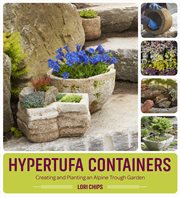
"A complete guide to designing, making and planting hypertufa troughs."-North American Rock Garden Society Hypertufa containers-also known as troughs-are rustic, striking, versatile, and perfect for small, Alpine plants. A mix of cement, perlite, peat, and water, they are simple and affordable to make at home. In Hypertufa Containers, Lori Chips details everything you need to know to make your own troughs and successfully garden in them. This hardworking book includes step-by-step instructions and color photography for making hypertufa containers in a variety of shapes and sizes. Plant portraits include growing and cultivation information, along with potting tips. A step-by-step guide to making hypertufa containers, the ultimate DIY garden planter. Lori Chips is the alpine manager at Oliver Nurseries in Connecticut, pressing the boundaries in the art and science of trough making and planting. She writes for the North American Rock Garden Society, has judged at the Philadelphia Flower Show, and is the recipient of the Carleton R. Worth Award for horticultural writing. Preface I had my first authentic encounter with troughs more than 20 years ago, while I was a student at the New York Botanical Garden's School of Professional Horticulture. Of course, I had seen images of troughs while wistfully looking through British garden books, sighing a little and making a mental note to learn more about them if the opportunity ever arose. Well, arise it did, while I was doing a rotation in the plant records department and was invited back to the Rock Garden greenhouse. Little did I know that during most of my horticultural career I would be devoting sizable chunks of every fall to designing and building these containers and finding my niche in the process. I felt remarkably lucky to be invited, and accepted with alacrity. Jimmy Martucci, the senior rock gardener and an amazing gardener by any measure, created several troughs that day. He learned his skills and earned his wisdom the hard way-by doing. A large share of that doing was under the exacting eyes of the renowned T. H. Everett, under whose direction the New York Botanical Garden (NYBG) Rock Garden was born. I would later hear stories of the garden's creation, massive stones moved by resident horses who spent their leisure time stabled beneath the exquisite glass conservatory. During my tenure at NYBG, one could still see the delineation of the stalls. I have a deep respect for the experienced gardeners of that peer group. Many of those men were second generation Italians giving voice to the Latin names of plants in an engaging Bronx accent; their competence still, for me at least, has no equal. There were a lot of things I didn't know that wintry afternoon as I stepped inside the Rock Garden potting shed. I was to spend many hours in the shelter of that shed, at that very potting bench. I would take fleets of cuttings, sow seed, and learn the fine points of show-potting alpines for the Rockefeller Center Flower Show. I would also bask in the camaraderie of many plant people, but especially of Jimmy, the man in charge of my trough-building education that day. As he measured and mixed ingredients, he talked about his methods. We put on masks and gloves and he taught me about the construction of his wooden molds. Quickly, I warmed up to the task at hand and to the man himself. I learned that Jimmy was not only easy to work with, he was one of the most inventive gardeners I would ever know. His ingenuity was in evidence everywhere: from the work table that dropped down on hinges, to the storage areas where each spading fork and scuffle-hoe had its spot on the wall, to the ancient scythes threaded through the rafters overhead. It was a warm space on a very cold day as I molded my first trough. When one works for any length
Mode of access: World Wide Web