






Nonfiction
eBook
Details
PUBLISHED
Made available through hoopla
DESCRIPTION
1 online resource
ISBN/ISSN
LANGUAGE
NOTES
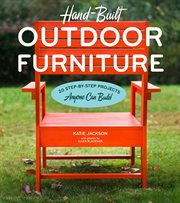
Selected as a Gardens Illustrated Recommended Read Hand-Built Outdoor Furniture covers twenty step-by-step, fully illustrated projects with hundreds of clear and easy-to-follow photographs. Finished pieces include simple items include a trellis, a flower box, and a plant stand and more complicated projects include a chaise lounge, a sectional with built-in storage, and a slat bench. Katie Jackson's projects are simple, clean, and timeless and work well within a wide variety of styles. Hand-Built Outdoor Furniture is the perfect primer for people new to woodworking, DIYers, and homeowners looking for a simple and affordable to decorate their space. With a few basic tools and a weekend, anyone can build beautiful furniture for their outdoor space! Hand-Built Outdoor Furniture covers the basics of woodworking-where and how to shop, and how to measure, screw, sand, and paint. The twenty step-by-step projects are organized by level of difficulty and fully illustrated with hundreds of clear and easy-to-follow photographs. Katie Jacksonis a designer and builder of simple furniture using renewable and reclaimed materials. After graduating from Bennington College, she trained as a cabinetmaker at New England School or Architectural Woodworking. She attended a Woodworking Teacher's Educational Program at Girls At Work, Inc., specializing in empowering at-risk girls with wood shop skills. Jackson headed the woodworking program at Camp Onaway for Girls for four summers, then teamed up with Lilah Crews-Pless to launch a design-build collaboration out of TechShop San Francisco and TechShop Menlow Park. She now builds at New England Society of Innovation and Technology (NESIT) Hackerspace. Learn more at katiejacksonwoodworks.com. Preface With a few basic tools and a weekend, you can build a beautiful piece of furniture out of wood for your outdoor space. In my experience, woodworking is mostly about problem solving. How can I make this more structurally stable? How should I correct this mistake? Everyone solves problems differently, and over the course of my woodworking career building furniture alongside other builders and teaching young woodworkers, I've enjoyed seeing a multitude of ways to cut a board or calculate a measurement. In my woodworking classes, I provide an example of a project I've built, such as the flower box on page-a student favorite-and ask the students to figure out their own process to build it. The projects I provide have no specific measurements and no written instructions, but once they study the pieces, the students can easily see how they are constructed and re-create the projects to their own desired measurements and personal flourishes. My students often use interesting and innovative ways to get to the same end point. I learn a lot from them, and I often notice a trend: once given a basic understanding of how to use woodworking tools and machines, many of the younger students are thrilled to be given the chance to solve problems through their own creativity, while many of the older students, especially adults, request help every step of the way and keep asking what to do next. Nonetheless, the intrepid younger students and the cautious older students, when given the same instruction on tool use and the same amount of time, all seem to produce the same caliber of high-quality woodworking. Perhaps this is because as we get older, we become more critical of ourselves. We may expect ourselves to be skilled in subjects we've never studied. We may be worried someone will see our work and criticize it, or that our work is not as good as someone else's. That kind of worry can prevent us from ever starting or continuing to learn a new skill. I encourage you to just begin. Getting away from glowing screens and doing something with your hands is a satisfying use of sp
Mode of access: World Wide Web