



Nonfiction
eAudiobook
Details
PUBLISHED
Made available through hoopla
EDITION
DESCRIPTION
1 online resource (1 audio file (8hr., 31 min.)) : digital
ISBN/ISSN
LANGUAGE
NOTES
Read by Erica Sullivan
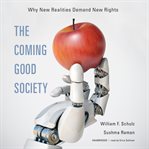
Two authors with decades of experience promoting human rights argue that, as the world changes around us, rights hardly imaginable today will come into being. A rights revolution is under way. Today the range of nonhuman entities thought to deserve rights is exploding-not just animals but ecosystems and even robots. Changes in norms and circumstances require the expansion of rights: What new rights, for example, are needed if we understand gender to be nonbinary? Does living in a corrupt state violate our rights? And emerging technologies demand that we think about old rights in new ways: When biotechnology is used to change genetic code, whose rights might be violated? What rights, if any, protect our privacy from the intrusions of sophisticated surveillance techniques? Drawing on their vast experience as human rights advocates, William Schulz and Sushma Raman challenge us to think hard about how rights evolve with changing circumstances, and what rights will look like ten, twenty, or fifty years from now. Against those who hold that rights are static and immutable, Schulz and Raman argue that rights must adapt to new realities or risk being consigned to irrelevance. To preserve and promote the good society-one that protects its members' dignity and fosters an environment in which people will want to live-we must at times rethink the meanings of familiar rights and consider the introduction of entirely new rights. Now is one of those times. The Coming Good Society details the many frontiers of rights today and the debates surrounding them. Schulz and Raman equip us with the tools to engage the present and future of rights so that we understand their importance and know where we stand
Mode of access: World Wide Web