



Nonfiction
eBook
Details
PUBLISHED
DESCRIPTION
1 online resource
ISBN/ISSN
LANGUAGE
SERIES
NOTES
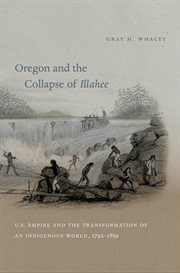
Modern western Oregon was a crucial site of imperial competition in North America during the formative decades of the United States. In this book, Gray Whaley examines relations among newcomers and between newcomers and Native peoples--focusing on political sovereignty, religion, trade, sexuality, and the land--from initial encounters to Oregon's statehood. He emphasizes Native perspectives, using the Chinook word Illahee (homeland) to refer to the indigenous world he examines. Whaley argues that the process of Oregon's founding is best understood as a contest between the British Empire and a nascent American one, with Oregon's Native people and their lands at the heart of the conflict. He identifies race, republicanism, liberal economics, and violence as the key ideological and practical components of American settler-colonialism. Native peoples faced capriciousness, demographic collapse, and attempted genocide, but they fought to preserve Illahee even as external forces caused the collapse of their world. Whaley's analysis compellingly challenges standard accounts of the quintessential antebellum "Promised Land."
Mode of access: World Wide Web